Loss
David Scott Lewis watched his mother disappear. Not all at once -- Alzheimer's doesn't work that way. It takes the small things first. The name of a grandchild. The recipe she'd made a thousand times. The route home from the grocery store she'd walked for decades.
Then it takes the big things. The recognition in her eyes when her son walked through the door. The ability to hold a conversation. The knowledge of who she was.
“My mother died from Alzheimer's. My sister Jenna was diagnosed 18 months ago. This is not abstract for me. This is the most personal fight of my life.”
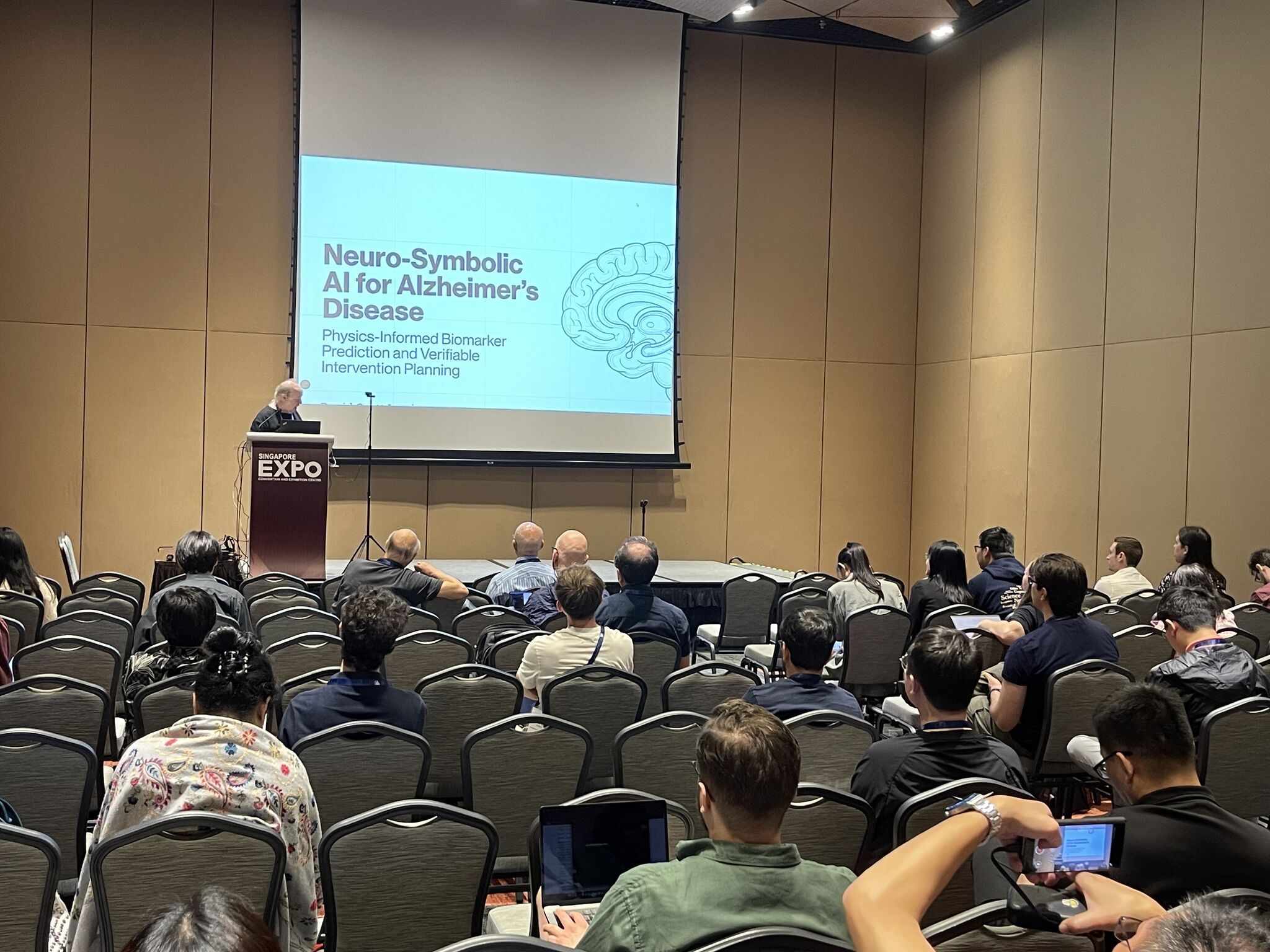
— David Scott LewisAlzheimer's disease affects 55 million people worldwide. That number will triple by 2050. It is the most common form of dementia, the seventh leading cause of death globally, and one of the costliest diseases in existence. There is no cure. There are barely any treatments that do more than delay the inevitable by a few months.
For David, this was never going to be acceptable. Not after watching his mother. Not after learning about his sister Jenna.
Breakthrough
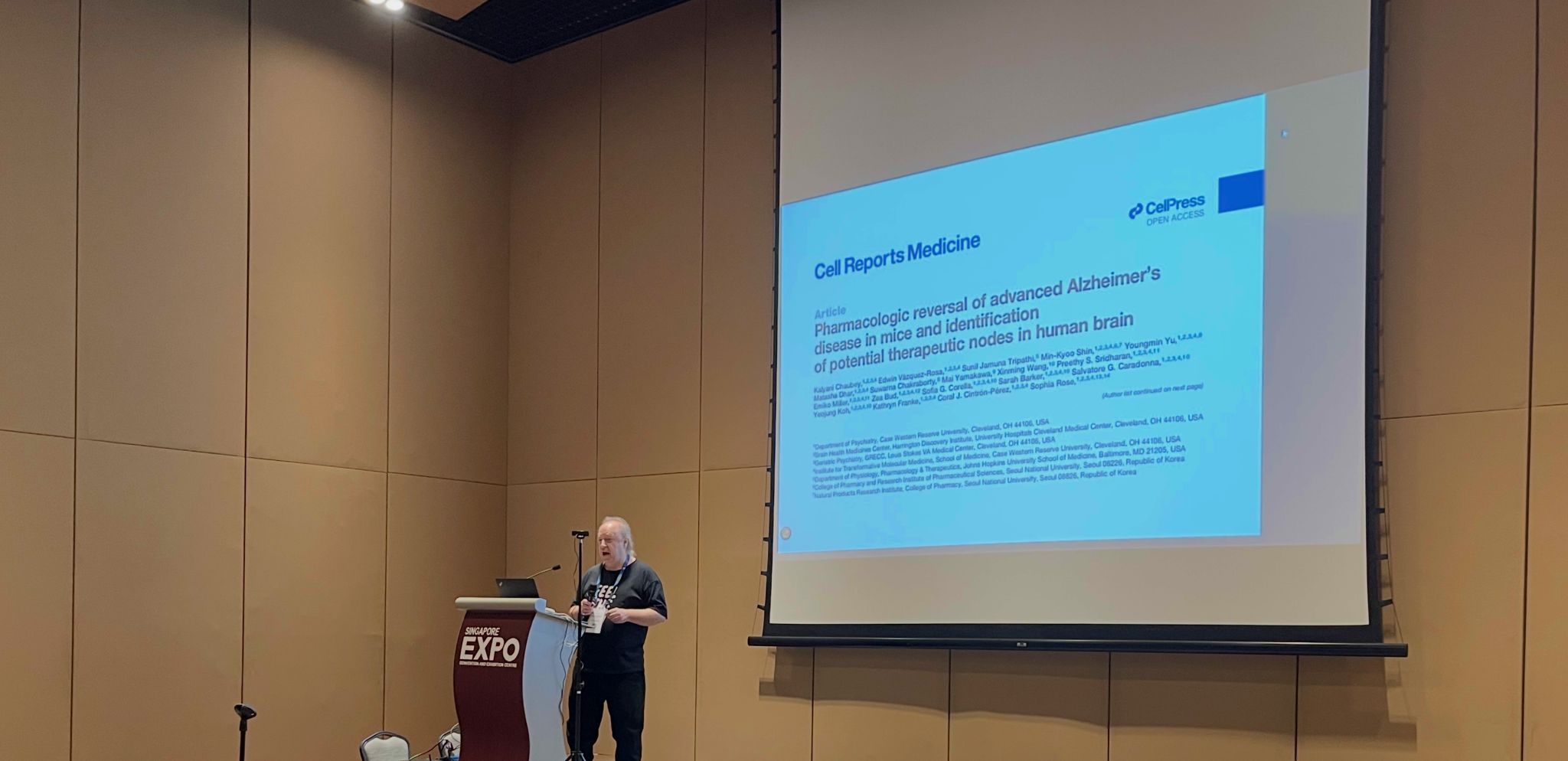
In January 2026, a paper was published in Cell Reports Medicine that changed everything David thought he knew about Alzheimer's disease.
Researchers demonstrated that a compound called P7C3-A20 -- an NAD+ pathway activator -- didn't just slow Alzheimer's progression in mice. It reversed it. Amyloid plaques cleared. Tau tangles resolved. The blood-brain barrier repaired itself. Cognitive function returned.
“I read the paper three times that night. By morning, I knew what I had to do. Not someday. Now.”
— David Scott LewisThe results were extraordinary -- but they were in mice. The gap between mouse model and human therapy is vast. It typically takes 10-15 years and $2-3 billion to bring a drug to market. Most academic labs cannot afford the computational tools needed to even begin exploring the pathway.
Commercial platforms like Schrodinger cost $500,000 or more per year. Most universities, most labs in developing countries, most independent researchers simply don't have access.
David saw the gap. And he saw the bridge.
Mission
The Reversal Initiative was born from a simple conviction: the computational tools to fight Alzheimer's should be accessible to qualified academic and foundation-funded researchers — not gated by enterprise software costs.
David assembled a team of AI researchers and computational biologists. Together with Enrique Zueco, they began building what would become a comprehensive computational drug-discovery platform covering everything from virtual screening to molecular dynamics simulation to toxicology prediction — a 37-module platform offered under partnership access to the labs that need it.
The model: a proprietary platform with partnership-access terms. Foundation grantees and academic research partners receive the tools at no cost; the IP stays with AIXC so we can keep building.
“We're not building a company in the venture sense. We're building a bridge between a preclinical breakthrough and the therapies that families like mine are desperate for. Foundation-funded researchers and academic partners get the tools at no cost. Every result we generate is published in peer-reviewed venues.”
— David Scott Lewis, FounderThe platform started with the NAD+ pathway -- the mechanism behind the Pieper lab's Cell Reports Medicine 2025 reversal study, the first published precedent we follow. But it was designed from the beginning to work with any Alzheimer's target. BACE1. GSK-3-beta. NMDA receptors. Neuroinflammation pathways. Qualified research partners can apply the tools to any target in their portfolio.
This is partnership science. This is the mission.
Every donation funds compute. Every result is published in peer-reviewed venues. Foundation and academic partners receive platform access at no cost.
Because someone's mother is running out of time. Because someone's sister is counting on us. Because 55 million families deserve better than "there is no cure."